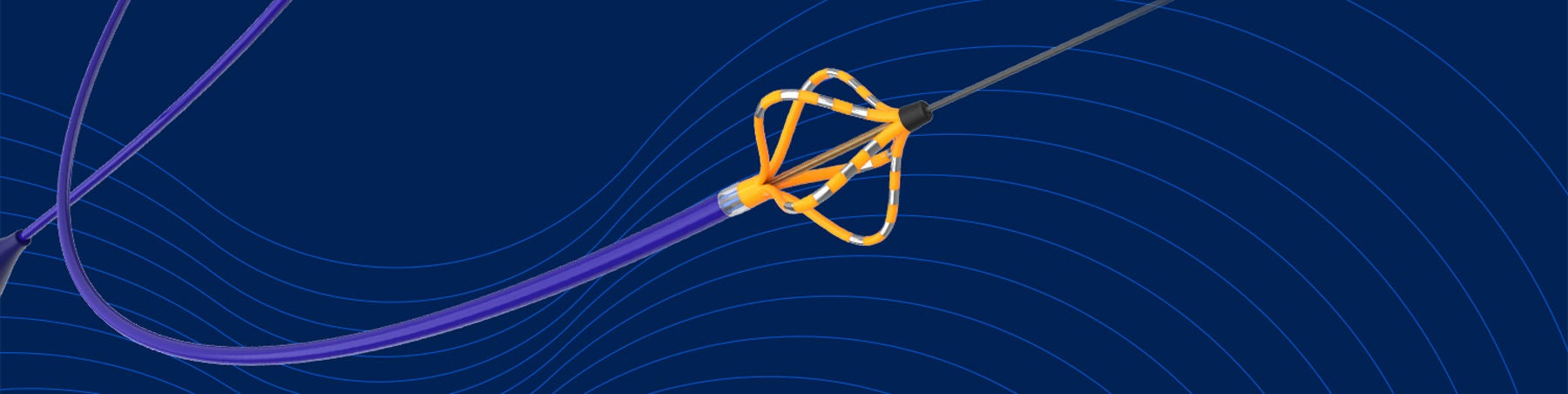
ADVENT trial overview
The ADVENT trial is the first randomized clinical trial that directly compared FARAPULSE™ PFA to standard-of-care thermal ablation—radiofrequency ablation (RFA) and cryoballoon ablation (CBA)—for the treatment of paroxysmal atrial fibrillation (PAF).1
The ADVENT trial: AA burden sub-analysis compared FARAPULSE PFA to standard-of-care thermal for recurrent atrial arrythmia (AA).2
The ADVENT long-term outcomes (LTO) study—an observational extension of the pivotal ADVENT trial—assessed effectiveness of FARAPULSE PFA (with the FARAWAVE PFA Catheter) vs thermal (RF or cryo) ablation out to 4 years.3
- ADVENT IDE
- ADVENT sub-analysis
- ADVENT LTO
FARAPULSE PFA vs. Standard Thermal Ablation in Paroxysmal AFib Patients (N=607)1
At 30 US centers, 65 operators conducted 1:1 randomization to FARAPULSE PFA or thermal ablation, using either radiofrequency ablation (RFA) or cryoballoon ablation (CBA) at each site.
Study design: Multicenter, prospective, single-blind, randomized controlled study
Patient population: Drug-refractory paroxysmal AFib
Reported outcomes: Safety, efficacy, non-inferiority to thermal ablation
Key findings: ADVENT trial
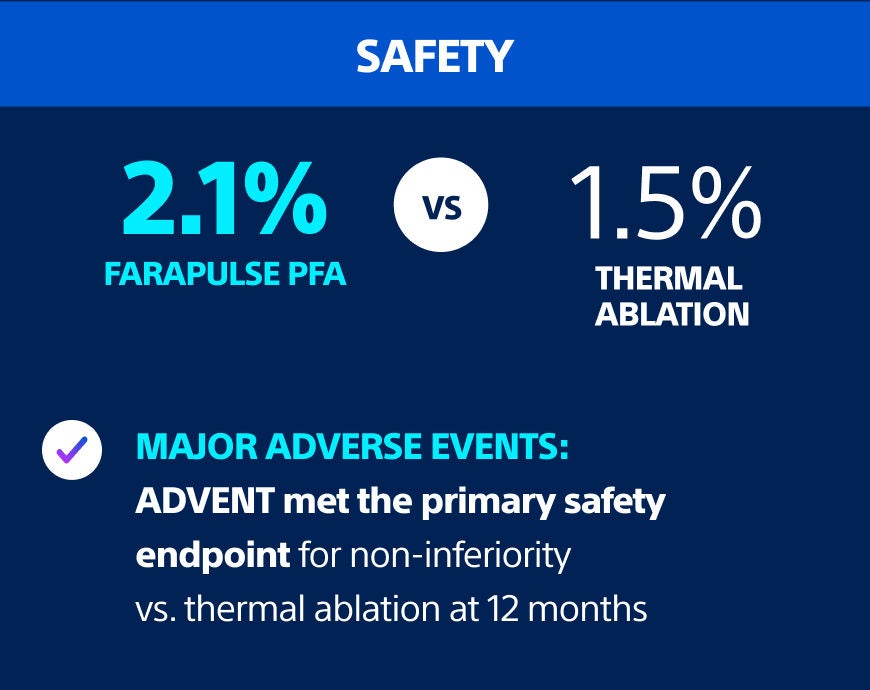
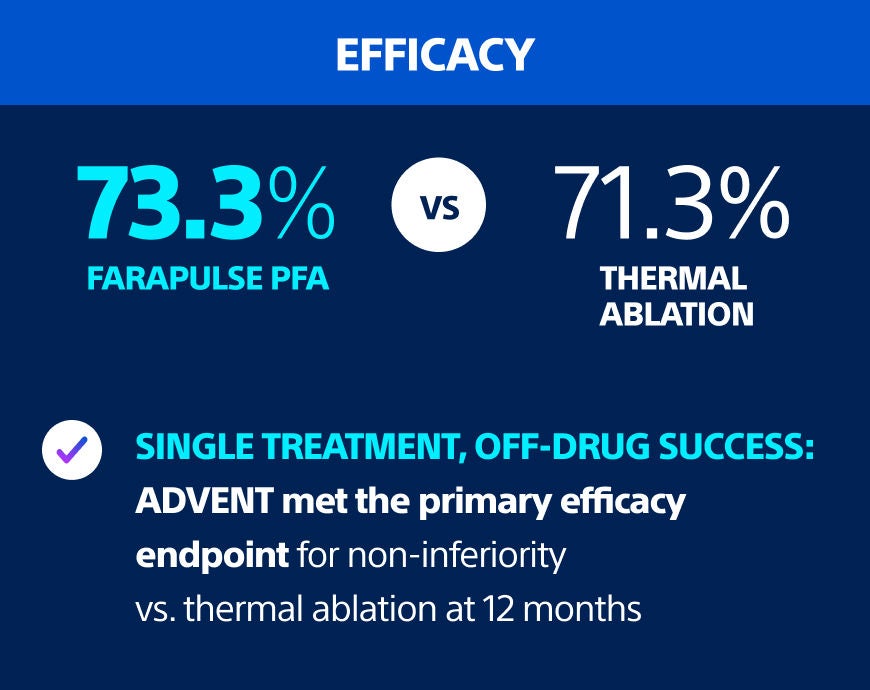
FARAPULSE PFA delivered excellent outcomes comparable to thermal ablation.
Outcomes at 1 Year Post-Ablation
Key Takeaway
- FARAPULSE PFA met all primary and secondary endpoints for safety and efficacy
About the study: ADVENT AA burden sub-analysis2
The ADVENT trial: AA burden sub-analysis2 compared the FARAWAVE™ PFA Catheter to standard-of-care thermal ablation (RFA and CBA) for recurrent AA. Patients treated with FARAPULSE™ PFA showed a significantly greater reduction in AA burden than thermal ablation.
Study design: Post-ablation analysis using prospectively collected ADVENT IDE randomized controlled trial data. 72-hour Holter monitoring at 6 and 12 months.
Patient population: Drug-refractory paroxysmal AFib patients (N=593)
Reported outcomes: Atrial arrhythmia (AA) burden = proportion of time in atrial arrhythmia over a monitoring period; Quality of Life
Key findings: AA burden sub-analysis
Significantly more patients achieved minimal atrial arrhythmia (AA) burden with FARAPULSE PFA.
The impact of AA burden: a clinically meaningful endpoint.
The traditional definition for recurrence in trials – episodes ≥30 seconds – may not reflect clinically meaningful AFib.2 AA burden, by contrast, was measured through transtelephonic ECG monitoring (TTM) collected weekly or for symptomatic episodes and 72-hour Holters were collected at 6 and 12 months. The TTM and Holter data was used to calculate AA burden by percentage of time. Quality-of-life (QoL) assessments were collected from patients and there was a significantly greater QoL improvement in patients with AA burden <0.1% versus ≥10%.1
AA Burden at 1 Year3
Post-Ablation AA Burden Threshold of 0.1% by Modality
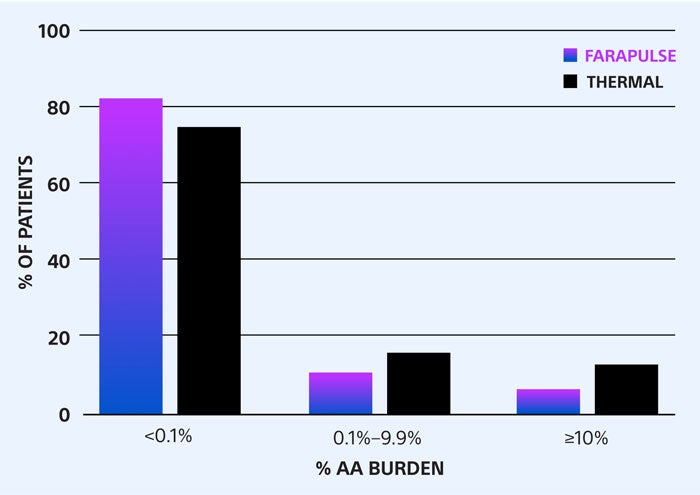
FARAPULSE PFA-treated patients were significantly more likely to have AA burden <0.1%
First Long-Term Data from a Randomized PFA Cohort (N=364)3
This is the first long-term comparison of PFA vs thermal ablation from a randomized trial cohort following patients out to 4 years.
Study design: Observational extension of the ADVENT trial. Assessed effectiveness of FARAPULSE PFA (with the FARAWAVE PFA Catheter) vs thermal (RF or cryo) ablation out to 4 years
Patient population: Paroxysmal AFib patients (N=364, n=183 PFA, n=181 thermal ablation)
Reported outcomes: Safety, efficacy – freedom from recurrence, cardioversion, or repeat ablation after the 3-month blanking period
Key findings: ADVENT LTO
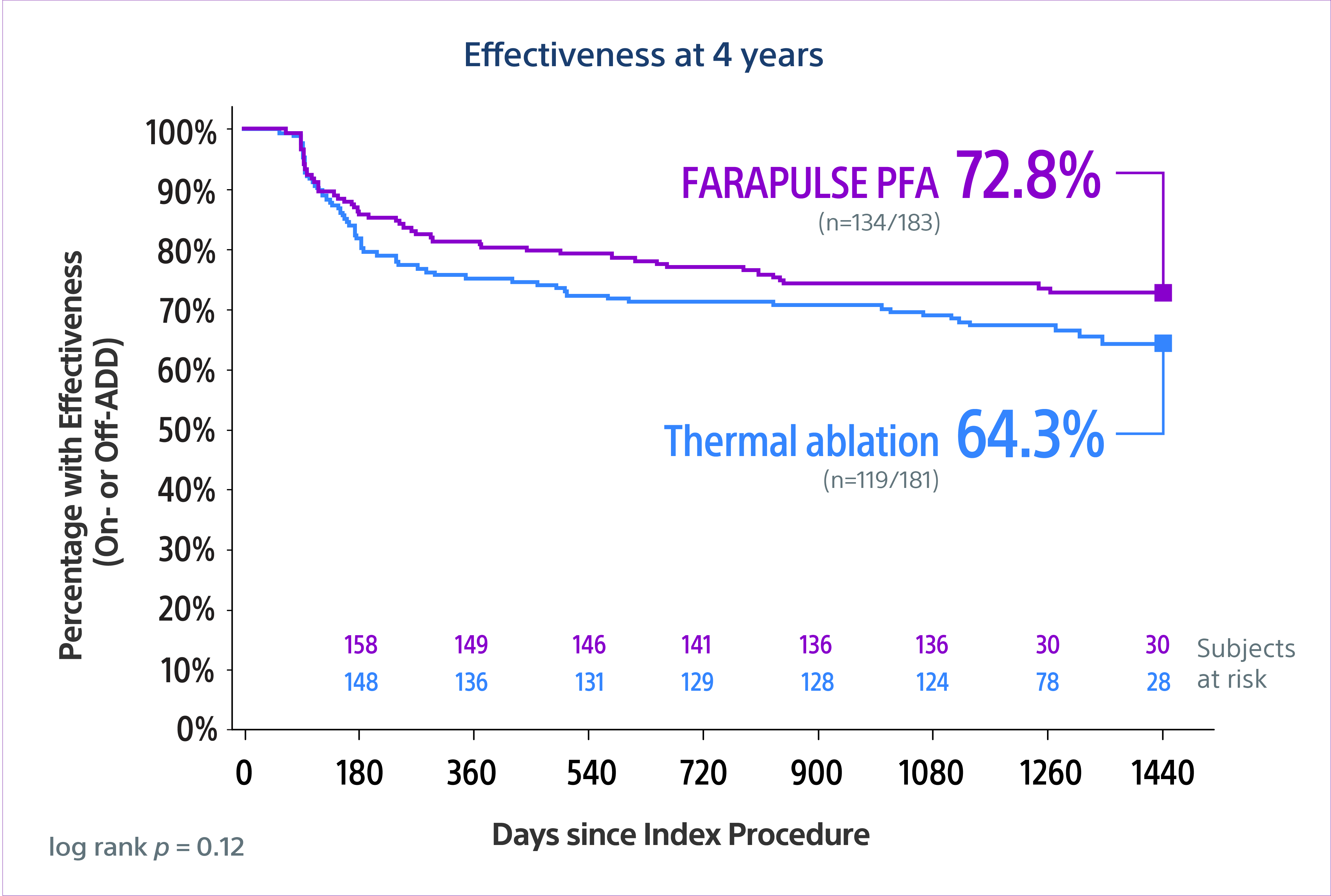
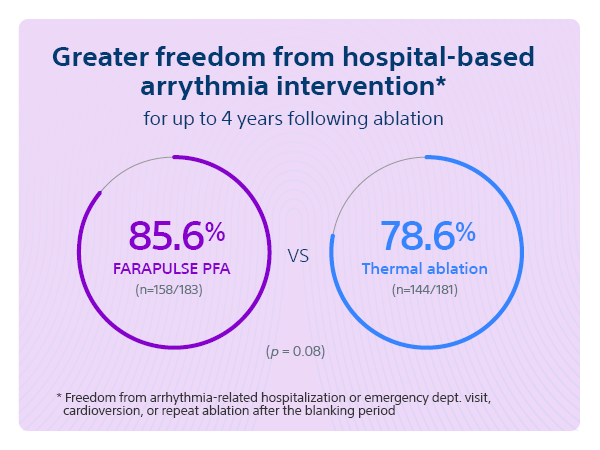
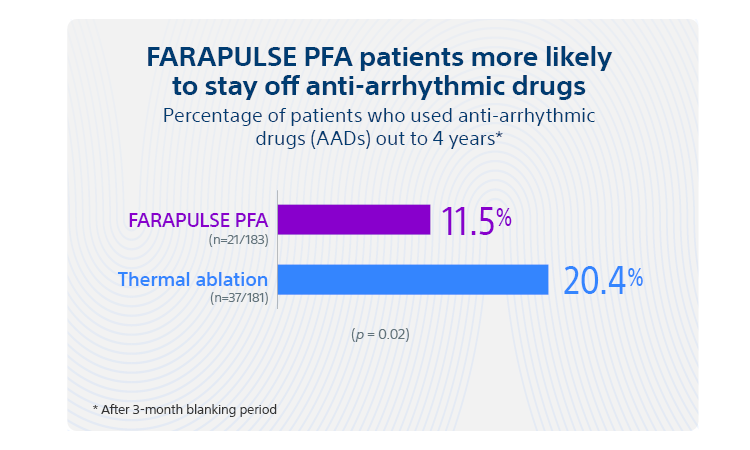
FARAPULSE PFA delivered greater effectiveness versus thermal ablation out to 4 years and comparable safety, with no long-term safety concerns observed.
Greater Long-Term Effectiveness
Fewer Hospital-Based Interventions
Patients More Likely to Stay Off Anti-Arrhythmic Drugs (AADs)
References:
1. Reddy VY, Gerstenfeld EP, Natale A, et al., Pulsed field or conventional thermal ablation for paroxysmal atrial fibrillation. New England Journal of Medicine.2023;Nov2;389(18):1660-1671. doi:10.1056/NEJMoa2307291 |
2. Reddy V, Mansour M, Calkins H. et al., Pulsed Field vs Conventional Thermal Ablation for Paroxysmal Atrial Fibrillation: Recurrent Atrial Arrhythmia Burden. J Am Coll Cardiol. 2024. 84(1): 61.74. https://doi.org/10.1016/j.jacc.2024.05.001
3. Reddy, V. Y. (2026). Pulsed field versus conventional thermal ablation for paroxysmal atrial fibrillation: 4-year outcomes in the ADVENT-LTO study. Nature Medicine. https://doi.org/10.1038/s41591-026-04246-4